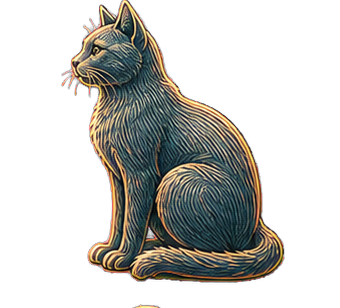
A cat slipping through a dream is one of those images that refuses a single meaning. In one book it warns of backbiting enemies you must drive away; in another it is a servant or a thief from your own household; in yet another strand of Nigerian thought it can signal a witch sent to press you down at night. The dreamer’s feeling on waking — hunted, calm, victorious — matters as much as the shape of the animal itself.
Below, three lenses look at the same cat and come to quite different conclusions. Miller’s English handbook reads the cat as a test of your mettle against gossip and treachery. The Damascus scholar al‑Nabulsi ties it to theft, sorcery, and the character of a tricky woman. A Yoruba viewpoint reads a cat as the vehicle of an òrìṣà or the mask of a nocturnal enemy. These pages don’t pick a winner; they show you what the old books say so you can weigh what fits your life.
Three Ways to Read a Dream Cat
Miller — The Cat as Ill Luck You Must Conquer
In the 1901 handbook, seeing a cat is a flat warning of ill luck — unless you drive it away or kill it. If the cat attacks, enemies will go to any length to blacken your name and strip your property. A thin, dirty cat signals distress. Banish the creature and you rise in fortune and fame. A pole‑cat adds the smell of salacious scandal: killing one means overcoming formidable obstacles.
al‑Nabulsi — The Cat as Thief, Sorcery, or a Deceitful Woman
For al‑Nabulsi a cat is most often a servant or a thief from your own household. A female cat is a deceitful, bad woman; her scratch or bite foretells an exhausting illness lasting a year. A calm cat promises a comfortable year, while a troublesome wild one drains you. Eating cat meat points to learning sorcery, and turning into a cat means a livelihood from theft. Killing a cat in the dream is catching a real thief.
al‑Nabulsi — The Tomcat as a Book, a Charmer, and a Spy
The tomcat gets its own dense entry. It is a book, drawn from a Qur’anic verse. It can also signal rudeness toward wife and children, adultery, eavesdropping, slander, backbiting, or an illegitimate child whose father is unknown. The tomcat is the person who charms with pleasant words and dancing, yet watches for chances to corrupt.
A Yoruba View — The Cat as Witch’s Mask or Messenger of the Night
In one strand of Yoruba interpretation a cat appearing in a dream can be the form taken by a witch who troubles the dreamer’s sleep — a suffocating presence on the chest, a sign of spiritual attack. Others know the cat as a creature associated with the òrìṣà Olóòkun, an òrìṣà of deep water, wealth and the hidden, and read it as a call to pay attention to secret matters, buried inheritance, or the power of the submarine realm. The cat that merely walks past without engaging may simply be an ààbò, a warning to watch your back in a matter you have been ignoring.
When the Cat Won’t Be Pinned Down — Big Cats and Lions
If your dream cat feels larger than a house cat — a cheetah or a lion — al‑Nabulsi shifts register entirely. A cheetah signals honor mixed with quarrels, a wavering enemy who shows neither friendship nor open war. A lion is a harsh, oppressive ruler; a lioness a tyrannical woman proud of her children. Wrestling a lion without killing it can foretell an enduring fever. Running from a lion without being seen means you escape fear and attain wisdom. These are not small household threats but powers you must reckon with.
Whose Cat Is It, Anyway?
Notice how the same animal shifts shape depending on which book you open. Miller demands you fight the cat; al‑Nabulsi wants you to identify which household insider it represents; a Yoruba reading asks whether the cat is a witch’s errand or a message from the deep. No single page can settle that — only the dreamer’s own context, religion, and the taste the dream leaves behind can tip the scales.
If the cat felt like a familiar friend, al‑Nabulsi’s calm cat and comfortable year may speak loudest. If it left you gasping under a weight, the Yoruba reading of a witch’s press could be the one that stays with you. If you chased it out and felt triumphant, Miller’s promise of rising fortune fits. The disagreement among the books is not a mistake; it is a map of how different worlds read the same shadow.
Want Your Dream Read Through One of These Traditions?
The bot can re‑read a dream strictly through Miller, strictly through al‑Nabulsi, or through a Yoruba lens. You choose which tradition in its settings.
Choose a Tradition